
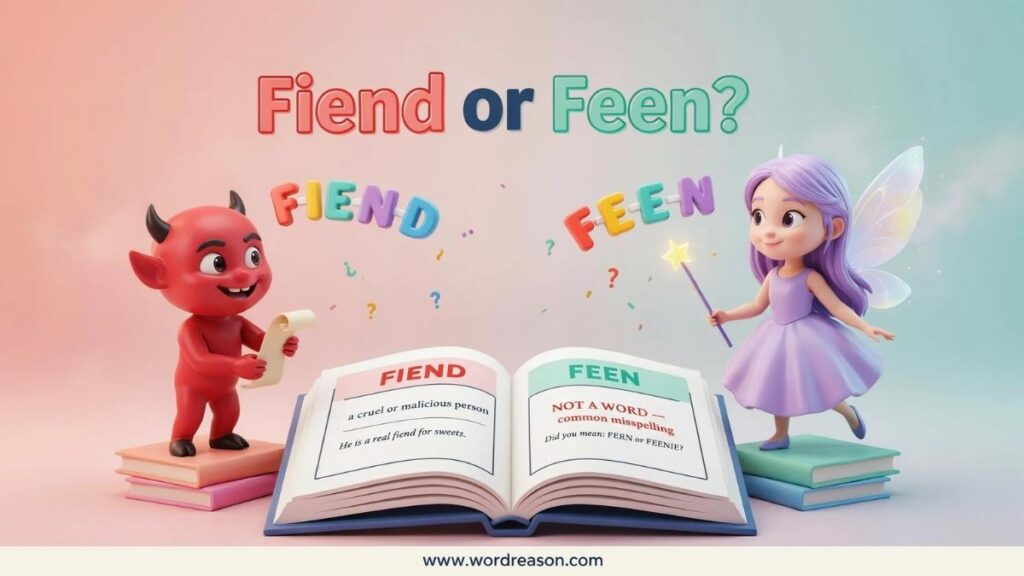
One tiny spelling mistake can turn a simple text into a confusing message. If you have ever wondered whether to write fiend or feen, you are not alone. These spellings often appear in online conversations, especially when people talk about slang, cravings, or drug-related expressions. However, there is an important difference between the two. Fiend is the standard English spelling, while feen is an informal slang variation. Choosing the right word becomes much easier when you understand its meaning and usage. In this guide, you will discover the key differences, common mistakes, pronunciation, and practical examples to help you write with confidence.
Fiend or Feen The Quick Answer
Fiend is the correct standard English spelling when you mean a cruel person, an evil spirit, or someone who is extremely enthusiastic about something.
For example, you might call a character in a horror story a fiend because of their evil behavior. You could also describe your brother as a football fiend if he loves watching and playing football.
Feen appears in informal slang connected with craving or strongly wanting something. For instance, someone might write, I am feening for pizza, in a text message.
Although both spellings appear online, they are not interchangeable in every situation. Fiend is the standard noun, while feen is an informal slang form associated with craving. The verb fiending also appears in casual English.
The easiest rule is to use fiend in standard writing. When you want to describe a strong desire in a formal context, choose words such as craving, wanting, or longing for.
Learn the difference between confusing more English words
Lieing or Lying Which Spelling Is Correct?
What Does Fiend Mean?

Fiend has several meanings in English. Depending on the context, it can describe an evil person, an evil spirit, or someone who enjoys a particular activity or thing very much.
Fiend as an Evil or Cruel Person
Traditionally, a fiend refers to an evil spirit, demon, or cruel person. Writers often use the word to describe a villain or someone who behaves in a particularly wicked way.
For example, a fantasy novel might feature a powerful fiend who threatens an entire kingdom. In another story, a character might call someone a fiend after that person commits a cruel act.
The word carries a negative meaning in these situations. It suggests wickedness, cruelty, or evil behavior.
You will often encounter this meaning in fantasy novels, horror stories, fairy tales, and dramatic writing. It can make a description sound more vivid than simply calling someone bad or unpleasant.
Fiend as Someone Who Loves Something
In everyday English, fiend can also describe someone who is extremely interested in something or enjoys it a great deal. This meaning is often playful rather than insulting.
For example, you might describe your sister as a chocolate fiend because she loves chocolate. A friend who spends every spare moment playing video games could be a gaming fiend.
People also use the word in expressions such as coffee fiend, music fiend, movie fiend, and fitness fiend. In each case, fiend emphasizes enthusiasm rather than evil behavior.
Context makes the meaning clear. Calling someone a coffee fiend usually means that the person loves coffee, not that they behave cruelly.
Fiend as a Slang Verb
Fiend can also function as an informal verb meaning to crave or strongly desire something. You may see forms such as fiends, fiended, and fiending in casual conversations.
For example, someone might say, I am fiending for ice cream, to explain how much they want a cold dessert. Another person might say they have been fiending for a vacation after a stressful week.
This usage is informal, so it may not suit every situation. In an academic paper, professional email, or formal article, craving, wanting, or longing for usually communicates the meaning more clearly.
Learn the difference between confusing more English words
Devide or Divide Which Spelling Is Correct?
Feen Mean in Slang

In modern informal language, feen is commonly associated with a strong craving or desire. People may use it in text messages, social media comments, captions, and other casual settings.
For example, someone might write, I am feening for a burger right now, to express a strong desire for food. Another person might describe a sneaker enthusiast as a sneaker feen.
The exact meaning depends on the sentence and the community using the word. Feen can also have regional or dialect meanings that differ from the slang sense associated with craving.
Although the spelling appears online, it is not the standard spelling of the noun fiend. Therefore, readers should consider both the context and the intended meaning before deciding how to interpret it.
Is Feen a Real Word?
The answer depends on what you mean by a real word.
Feen appears in recorded slang and dialect usage, but it is not the standard spelling of the noun fiend. Some dictionaries record it as an informal form associated with the slang verb meaning to desire something greatly. In Irish dialect usage, feen can also mean man.
Therefore, it would be inaccurate to claim that feen never appears in English. It does appear in specific contexts, but it does not replace fiend as the established spelling of the standard noun.
If you are writing about an evil person, an evil spirit, or someone who loves a particular activity, use fiend. If you want to describe a craving, choose craving or wanting in formal writing.
Learn the difference between confusing more English words
Congratulations or Congradulations? which Spelling is Correct?
Feen Mean in Text Messages
In text messages, feen usually appears when someone wants to express a strong craving or desire in a casual way.
For example, one friend might ask whether another person wants to get tacos. The reply could be, Yes, I am feening for tacos.
The meaning is straightforward: the person really wants tacos.
Similarly, someone might write, I am feening for the weekend, to show how much they want the weekend to arrive. In standard English, the same idea could be expressed as, I cannot wait for the weekend.
Feen and related forms can make a message sound casual and conversational. However, they may confuse readers who are unfamiliar with the slang, so clear alternatives are often better when the audience is broad.
Feen on Social Media
On platforms such as TikTok, Instagram, Snapchat, and other social networks, slang spellings can spread quickly. Users often choose words that match their everyday speech or the style of a particular online community.
As a result, you may encounter feen, feening, or related forms in captions, comments, and conversations. Their appearance online does not automatically make them standard spellings.
If you are writing a casual post, slang may suit your audience. However, an article, school assignment, or professional document generally benefits from standard English and clear wording.
Learn the difference between confusing more English words
Inter vs Intra what it really means?
Fiend vs Feen The Main Differences

The difference between fiend and feen becomes easier to understand when you compare their meanings and typical uses.
| Category | Fiend | Feen |
|---|---|---|
| Standard English noun | Yes | Not as the standard spelling of fiend |
| Describes an evil person | Yes | Not usually |
| Describes an enthusiastic fan | Yes | Sometimes used informally to suggest intense interest |
| Meaning related to craving | Can appear as an informal verb | Commonly appears in slang associated with craving |
| Suitable for formal writing | Yes, when the meaning fits | Generally avoid it |
| Example | He is a movie fiend. | She is feening for a new phone. |
The most important distinction involves both meaning and grammar. Fiend is a standard noun, although it can also appear as a slang verb. Feen is an informal form associated with craving and has other regional uses.
Consider the difference between these sentences: My cousin is a coffee fiend and My cousin is fiending for coffee.
The first sentence describes a person who loves coffee. The second describes someone who strongly wants coffee at that moment.
Although the meanings overlap, the sentences serve different purposes. The first describes a general interest, while the second expresses a current craving.
Learn the difference between confusing more English words
Salvadoran or Salvadorian Which Spelling Is Correct?
Fiend or Feen Origin and History
The history of fiend helps explain why it remains the standard spelling in modern English.
Where Did Fiend Come From?
Fiend has roots in Old English. The historical form fēond meant an enemy or adversary. Over time, the word became associated with the devil, demons, and evil spirits.
English speakers later expanded its meaning to include cruel or wicked people. Eventually, the word also developed a more casual sense that describes someone with an intense interest in a particular activity or subject.
Today, you might call someone a coffee fiend without suggesting anything evil. This broader meaning allows the word to appear in both serious and humorous contexts.
Feen Become Associated With Slang?
Informal speech often changes words through pronunciation, regional usage, and community conventions. Online communication can spread these variations even faster.
Feen appears in some informal settings as a way to express a strong craving or desire. It is associated with slang forms such as feening and feenin. However, these spellings do not replace fiend as the established noun in standard English.
The distinction matters because a word can be familiar and widely used in a particular community without becoming the preferred spelling in every context.
Does the Origin Change Which Spelling You Should Use?
No. The history explains the relationship between the forms, but it does not eliminate the difference between standard English and informal slang.
If you want to describe a cruel person, an evil spirit, or someone who is extremely enthusiastic about a hobby, use fiend.
If you are writing dialogue or a casual message and deliberately want to use slang about craving something, feen may fit the intended voice. Otherwise, craving or wanting is the safer choice.
Learn the difference between confusing more English words
Lilies or Lillies Which Is the Correct Spelling?
a Difference Between American and British English
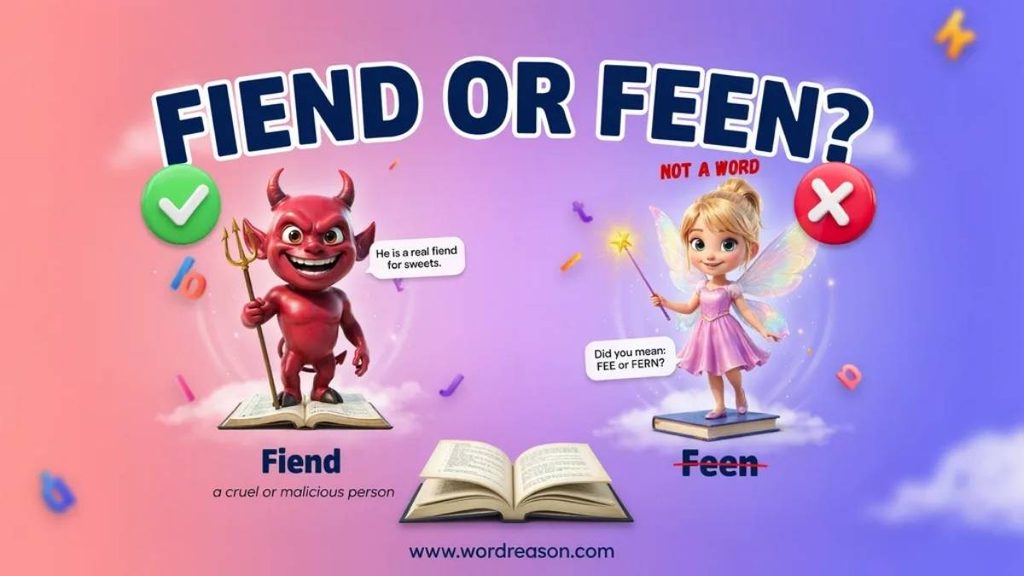
The standard spelling fiend remains the same in American and British English. You do not need to change the spelling depending on which variety of English you use.
For example, an American might describe someone as a chocolate fiend, while a British speaker might call someone a football fiend. Both expressions use the standard spelling.
Feen has other recorded regional and dialect uses, including an Irish dialect meaning man. That meaning is separate from the modern slang use associated with craving.
Therefore, location and context can affect what feen means, but they do not change the standard spelling of the noun fiend.
Learn the difference between confusing more English words
Losses or Loses Which spelling Is Correct?
Fiending or Feening Which Spelling Is Correct?
This is another common source of confusion because both forms appear in casual writing.
Fiending is the established spelling of the slang verb form derived from fiend. It means craving or strongly wanting something.
Feening is an informal variant that appears in some slang communities and online conversations. Although readers may understand it, it is generally less suitable for formal writing.
| Form | Typical meaning | Example | Best context |
|---|---|---|---|
| Fiend | An evil person, evil spirit, or enthusiastic fan | He is a gaming fiend. | Standard English |
| Fiending | Craving or strongly wanting something | I am fiending for coffee. | Informal slang |
| Feen | Informal slang associated with craving | He is a sneaker feen. | Casual conversations |
| Feening | Informal variant of fiending | She is feening for dessert. | Casual slang |
| Craving | A strong desire for something | I am craving coffee. | Standard and formal writing |
Examples of Fiending
Someone might say, I am fiending for a slice of pizza, to express a strong craving. Another person might explain that they were fiending for another opportunity to compete.
The same form can describe a desire for something ordinary, such as a snack, or something more significant, such as a chance to pursue a goal.
Although fiending is familiar in informal speech, craving is usually clearer in formal writing.
Examples of Feening
Someone might write, I am feening for some chocolate, or He is feening for a new pair of sneakers.
These examples reflect informal slang rather than formal spelling conventions. If you want a more polished version, write, I am craving chocolate, or He really wants a new pair of sneakers.
The choice depends on your audience and the tone you want to create.
Learn the difference between confusing more English words
Grate or Great Which spelling Is Correct?
Fiend, Feen, Fein and Fien What Is the Difference?
These spellings look similar, but they are not interchangeable. The right choice depends on the word you intend to use.
Fiend
Fiend is the standard English spelling for a cruel person, an evil spirit, or someone who is extremely enthusiastic about something.
For example, a story might feature a dangerous fiend, while a casual conversation might describe someone as a music fiend.
Feen
Feen appears in informal slang associated with craving and in some regional or dialect uses. It is not the standard spelling of the noun fiend.
For example, someone might say they are feening for a snack. In formal English, craving a snack would be clearer.
Fein
Fein can appear as a surname or in specific names and foreign language expressions. It is not the standard spelling of fiend.
If you want to describe an enthusiastic fan or a cruel person, use fiend instead.
Fien
Fien may appear as a name or in a particular language or context, but it is not the standard English spelling of fiend.
For ordinary English writing, do not use fien when you mean an evil person or an enthusiastic fan.
Which Spelling Should You Choose?
Start by identifying what you want to say. If you mean a cruel person, an evil spirit, or an enthusiastic fan, choose fiend.
If you mean a strong craving and want to use slang, feen or feening may fit an informal conversation. You need standard English, choose craving or wanting.
Learn the difference between confusing more English words
Forest or Forrest Which Spelling Is Correct?
Common Mistakes When Using Fiend or Feen
Even experienced writers can mix up these spellings, especially when they encounter slang online. A few simple rules can prevent most errors.
Using Feen as the Standard Noun
Consider the sentence, My brother is a football feen.
If you are writing standard English, the correct version is, My brother is a football fiend.
The second sentence uses the established noun for someone who loves football.
Assuming Fiend Always Means an Evil Person
Fiend does not always describe someone wicked. It can also refer to a person who loves something intensely.
For example, She is a chocolate fiend usually means that she loves chocolate. It does not suggest that she behaves cruelly.
Understanding this broader meaning helps you recognize the word in everyday conversations.
Treating Feening and Fiending as Formal Language
Both forms appear in informal slang, but they may sound out of place in professional writing.
Instead of writing, I am feening for a vacation, you could write, I am longing for a vacation, or I really want a vacation.
These alternatives preserve the meaning while making the sentence more suitable for a formal audience.
Confusing Slang With Standard Spelling
A spelling can be common in text messages and social media comments without being the best choice for a school essay, formal report, or professional email.
Before using feen, consider your audience. If the slang is important to the voice of your writing, it may fit. If clarity and standard spelling matter more, choose fiend or a clearer alternative.
Everyday Examples
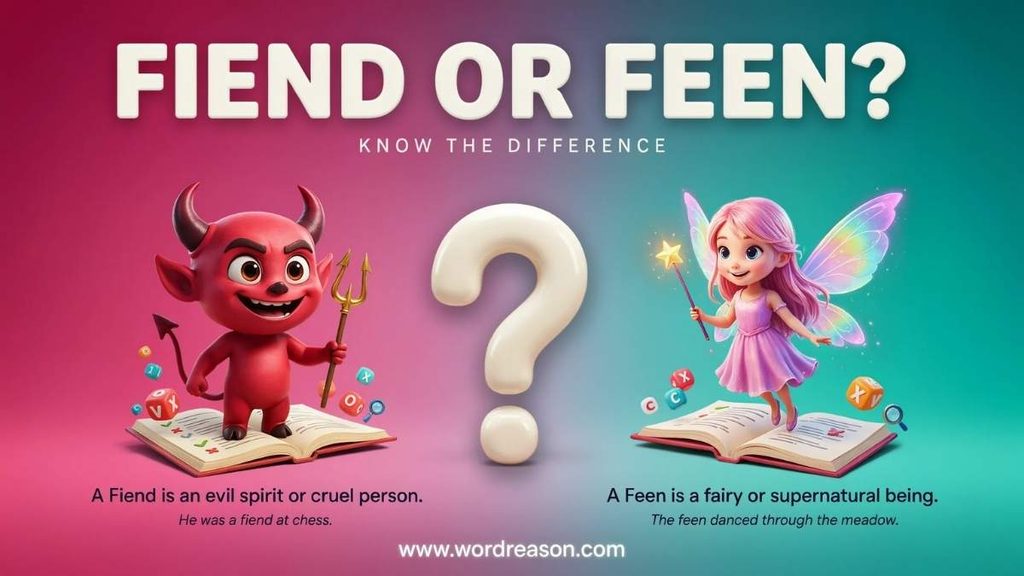
Seeing the words in context makes the difference easier to remember.
Text Messages
A person might text, I am feening for some fries. The sentence expresses a strong craving in an informal way.
A standard alternative is, I am craving some fries.
Someone could also say, I am a fast food fiend, to describe a general love of fast food. The first two examples describe a current desire, while the last describes a lasting interest or habit.
Social Media Captions
An informal caption might read, Coffee feen checking in.
If the writer wants the standard spelling for someone who loves coffee, the caption becomes, Coffee fiend checking in.
Both versions may communicate the intended idea to an online audience, but fiend is the standard noun.
Music and Pop Culture
Slang forms such as feen, feening, and fiending may appear in lyrics, dialogue, or online discussions. Writers and performers sometimes use nonstandard spellings to reflect a particular voice, rhythm, or community.
When you discuss slang, keep the original spelling if it matters to the context. However, use standard spelling in your own explanatory writing unless you deliberately want to reproduce informal language.
School and Professional Writing
For schoolwork, articles, business emails, and formal documents, use standard English.
Instead of writing, He is a sneaker feen, write, He is a sneaker enthusiast, or He is a sneaker fiend.
Likewise, replace I am feening for a break with I really need a break if you want a more formal tone.
The goal is not to eliminate slang from every conversation. It is to choose words that suit the situation and help readers understand you.
Synonyms for Fiend and Feen
The best synonym depends on the meaning you want to express. A person who loves books is not necessarily wicked, and someone craving food is not necessarily dependent on it.
| Word | Meaning | Example |
|---|---|---|
| Enthusiast | Someone with a strong interest in something | She is a photography enthusiast. |
| Fanatic | Someone with an extremely strong interest | He is a fitness fanatic. |
| Lover | Someone who enjoys something very much | She is a lover of classic films. |
| Person with substance abuse disorder | Someone dependent on a substance or strongly attached to a habit | The phrase chocolate person with substance abuse disorder is sometimes used casually. |
| Devotee | Someone deeply committed to an interest or activity | He is a devotee of jazz music. |
| Craving | A strong desire for something | I have a craving for chocolate. |
| Longing | A deep desire for something | She felt a longing for home. |
| Demon | An evil spirit in religious or fictional contexts | The hero fought a demon. |
| Villain | A character who does evil or opposes the hero | The villain planned to steal the treasure. |
Use people with substance abuse disorder carefully when discussing substance dependence. People sometimes use it humorously in everyday conversation, but the word can carry a serious meaning.
When you mean someone who enjoys an activity, enthusiast or devotee may express the idea more accurately. When you mean a strong desire, craving is often the clearest choice.
How to Remember the Correct Spelling
A simple memory trick can help you choose the right word.
Remember the Letter D in Fiend
Fiend ends with the letter d. If you are describing an evil person, an evil spirit, or someone who loves something intensely, remember that final letter.
For example, He is a music fiend uses the standard spelling. Writing He is a music feen would not be standard for this meaning.
Match the Word to the Meaning
If you are describing a person, fiend is usually the right noun for an enthusiast or a cruel person.
If you are describing a craving, words such as craving and wanting are clear standard alternatives. In slang, you may encounter fiending or feening.
Consider Your Audience
A text to a friend allows more slang than a job application or school assignment. Before choosing feen, ask whether the informal style suits the situation.
When in doubt, use fiend for the standard noun and craving for the feeling of wanting something intensely.
Fill in the Blanks
Complete each sentence with the correct word or spelling.
- The correct standard spelling is ______.
- The word feen is commonly used in ______.
- A fiend can describe someone who strongly ______ something.
- The word ______ means to pretend or fake something.
- The D in fiend is ______.
- Feen is an ______ spelling of fiend.
- Someone who loves video games might be called a gaming ______.
- The standard spelling for a person with an intense drug craving is drug ______.
- The word fiend can describe an evil ______.
- Feign and fiend have different ______.
- The slang word feen often describes a strong ______.
- Fiending means wanting something ______.
- Feen is more common in casual messages and online ______.
- The word fiend is accepted in standard ______.
- Someone who loves pizza might call themselves a pizza ______.
- The word feign is a ______.
- A person who pretends to be sick may ______ illness.
- The spelling fien is generally considered ______.
- The word fiend can refer to an enthusiastic ______.
- Feen is not the preferred spelling in formal ______.
- Drug fiend is an informal phrase related to drug ______.
- The word fiend ends with the letter ______.
- Someone who desperately wants coffee might say they are ______ for coffee.
- Addiction is a health condition, not simply a lack of ______.
- In formal writing, use fiend instead of ______.
Answer Session
- Fiend
- Slang
- Craves
- Feign
- Pronounced
- Informal
- Fiend
- Fiend
- Person
- Meanings
- Craving
- Intensely
- Conversations
- English
- Fiend
- Verb
- Feign
- Nonstandard
- Fan
- Writing
- Addiction
- D
- Fiending
- Willpower
- Feen
FAQs About Fiend or Feen
Does fiend mean addiction?
It can describe someone with an intense craving for a substance or something else.
How do you spell a drug fein?
The correct standard spelling is fiend.
What is a feen in slang?
Feen is slang for someone who strongly craves something.
Is the D in fiend silent?
No. The D is pronounced.
Is it fiend or feen?
Fiend is the standard spelling. Feen is an informal slang variation.
What is a fiend in slang?
A fiend is someone who intensely wants or seeks something.
What does a person with a addiction fein mean?
It is an informal spelling of a person with a addiction fiend, referring to someone with a strong craving for drugs.
Is it feign or feen?
Feign means to pretend. Feen is informal slang for craving something.
What are the top three worst ?
Person with substance abuse disorder can cause serious harm, but addiction severity varies.
What is junk slang for drugs?
Junk can refer to heroin in slang. The term can be stigmatizing.
AEO
Is feen a real English word?
It appears in slang, but fiend is the standard spelling.
What does fiending mean in a text?
It means craving or wanting something intensely.
Can you use fiend for food?
Yes. A pizza fiend is someone who really loves pizza.
What is the difference between fiend and feign?
Fiend refers to a person or intense craving. Feign means to pretend.
Is feen formal or informal?
Feen is informal slang.
conclusion
English slang can be confusing, and the difference between fiend and feen is a perfect example. Although both spellings appear in online conversations, fiend is the standard English spelling, while feen is an informal slang variation associated with intense cravings. Remember, fiend can describe someone who desperately wants something, whereas feign means to pretend. Mixing them up can turn a clear message into a spelling puzzle nobody asked to solve! Now that you know their meanings, differences, and correct usage, you can avoid these common mistakes with confidence. When spelling doubts creep in, stick with fiend and keep your writing clear, accurate, and natural.

Bella AJS
Bella AJS is an experienced blogger and passionate language enthusiast at WordReason. She specializes in English grammar, word meanings, spelling, and commonly confused words. With a clear and practical writing style, Bella helps readers understand tricky language rules without the textbook headache. Her goal is simple: make English easier, clearer, and more enjoyable one word at a time.