
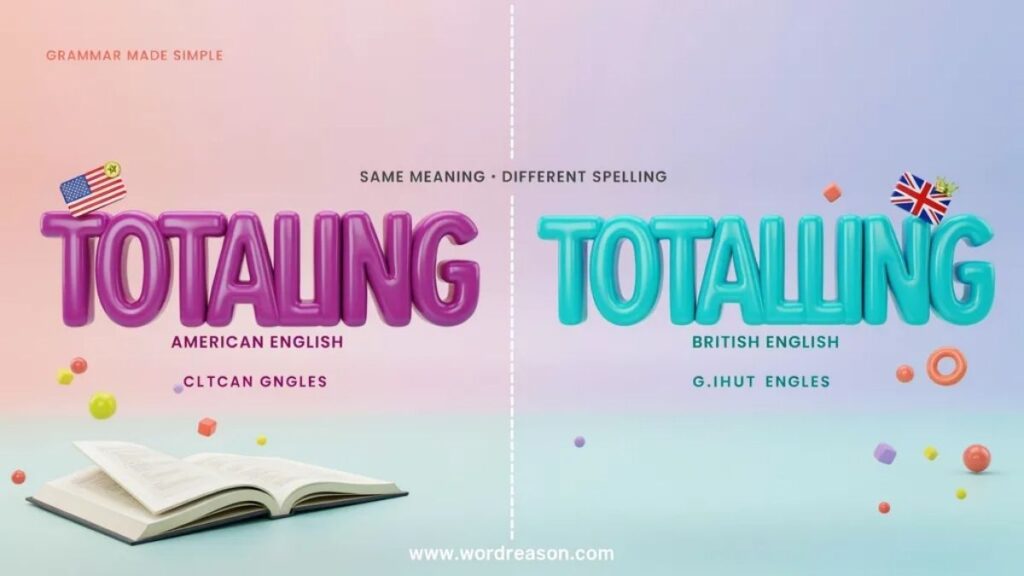
Is it totaling or totalling? That extra L may look like a tiny detail, but it can leave even confident writers second guessing their spelling. Here is the good news: both versions are correct! The difference simply depends on whether you follow American or British English. American writers prefer totaling, while British writers generally use totalling. Although the meaning stays exactly the same, choosing the right spelling keeps your writing consistent and polished. Whether you are adding expenses, calculating a bill, or checking financial figures, this guide clears up the confusion with simple rules and practical examples.
Is It Totaling or Totalling?
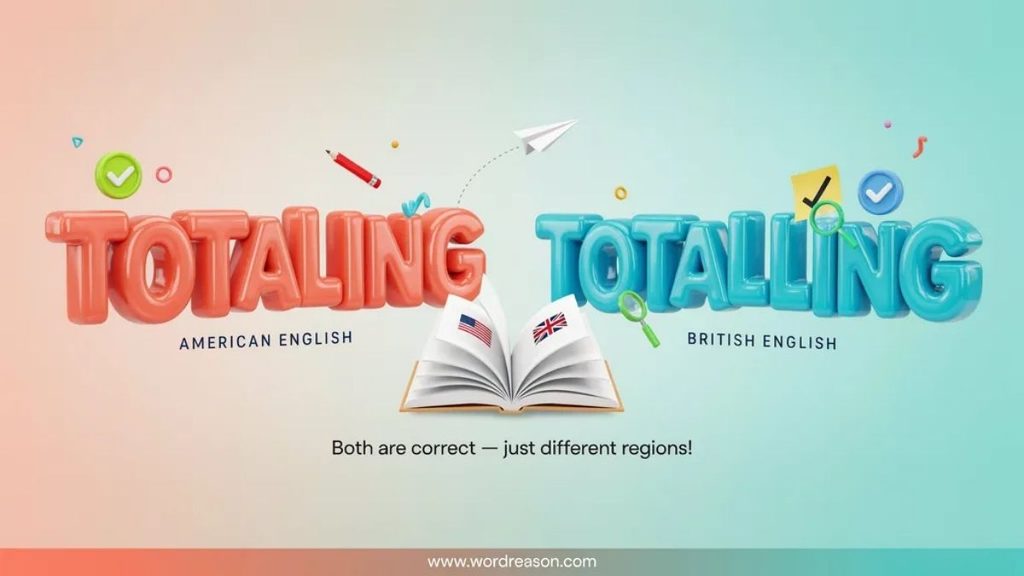
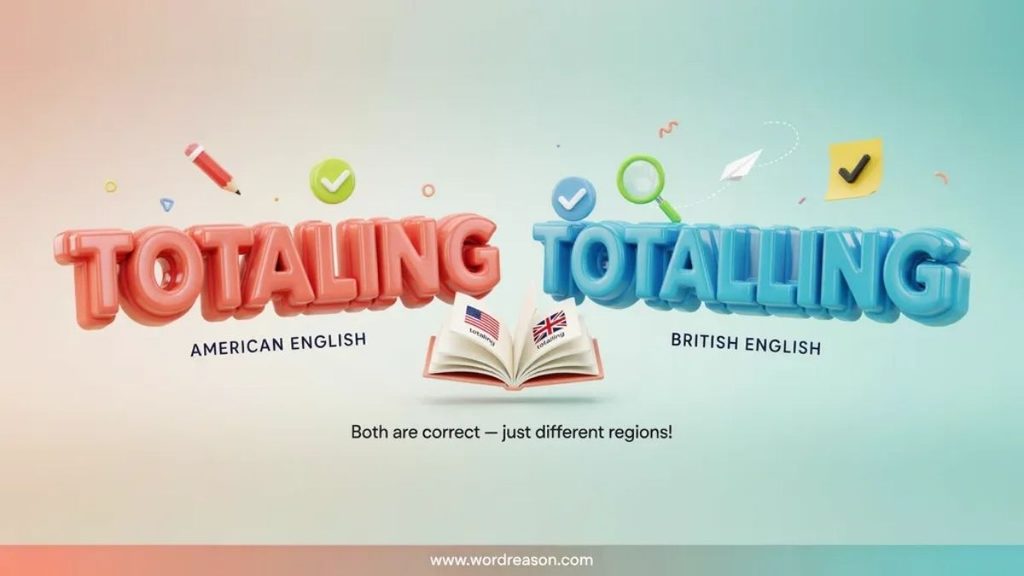
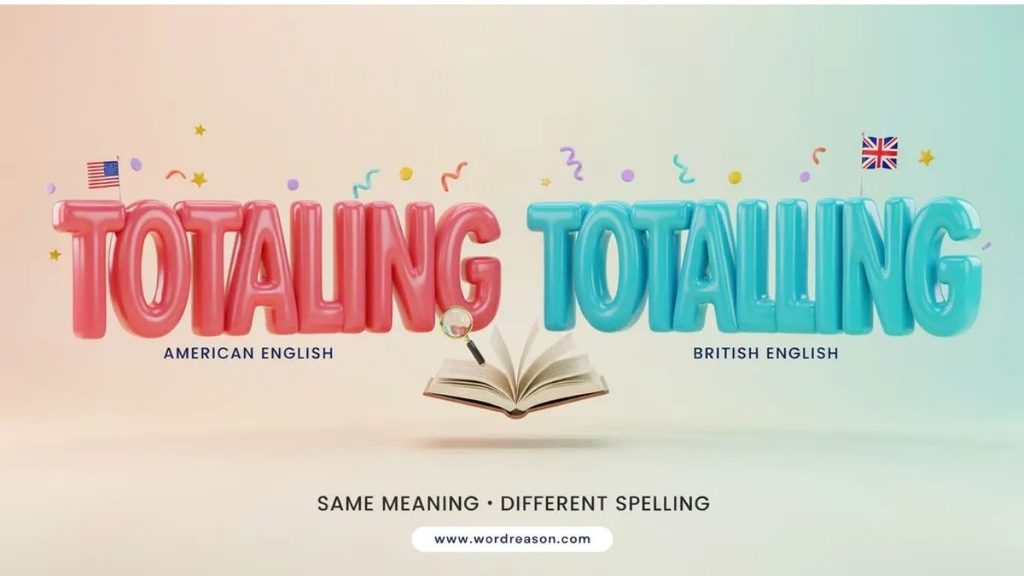
Both totaling and totalling are correct spellings of the same word. Neither is a misspelling. The difference reflects regional spelling conventions rather than a difference in meaning.
American English generally uses totaling. British English usually uses totalling. Therefore, your choice should depend on your intended audience and the spelling conventions you follow.
For example, an American accountant might write
The accountant is totaling the monthly expenses.
A British accountant would typically write
The accountant is totalling the monthly expenses.
Both sentences communicate exactly the same information. The only difference is the spelling of the final word.
When Should You Use Totaling?
Use totaling when writing in American English. This spelling follows the American convention of keeping one L when adding certain suffixes to words that end in a single L.
You will commonly see totaling in American newspapers, business documents, financial reports, academic writing, and everyday communication.
For example
The donations are totaling $12,000 this month.
She is totaling the expenses before submitting the report.
The final amount is totaling more than the original estimate.
When Should You Use Totalling?
Use totalling when writing in British English. British spelling conventions generally double the final L when adding a suffix that begins with a vowel.
You will commonly encounter totalling in British publications, educational materials, official documents, and business communication.
For example
The donations are totalling £12,000 this month.
She is totalling the expenses before submitting the report.
The final amount is totalling more than the original estimate.
The choice is simple: use totaling for American English and totalling for British English. Just avoid switching between the two forms within the same document.
Learn the difference between confusing more English words
Label or Lable which Spelling is correct?
What Does Totaling or Totalling Mean?
Totaling and totalling mean adding several numbers, amounts or figures together to calculate their combined value. Both forms come from the verb total.
The word can describe a mathematical calculation, a financial process, or the act of reaching a final amount.
For example, imagine you purchase groceries worth $25, $40, and $35. When you add these amounts together, you get $100. You are totaling the grocery expenses.
The word can also describe the process of calculating the combined value of sales, invoices, donations, bills, expenses, or other figures.
Totaling as a Verb
Totaling is the present participle of the verb total in American English. Totalling serves the same grammatical purpose in British English.
Both forms can appear in continuous verb tenses or function as gerunds.
For example
The cashier is totaling the purchases.
They are totalling the company expenses.
Totaling the figures takes only a few minutes.
Totalling the monthly revenue requires careful calculations.
Totaling as a Gerund
A gerund is a verb form ending in -ing that functions as a noun. Both totaling and totalling can serve this purpose.
For example
Totaling the expenses helps the company manage its budget.
Totalling the donations requires accurate records.
In these sentences, the words describe an activity rather than directly expressing an action performed by a subject.
Totaling as a Present Participle
The present participle appears in continuous verb tenses and can also describe an ongoing action.
For example
The manager is totaling the daily sales.
The accountant has been totalling the invoices since morning.
Both examples describe an activity that is happening or has continued over a period of time.
Learn the difference between confusing more English words
Salvadoran or Salvadorian Which Spelling Is Correct?
American English or British English
The difference comes from regional spelling conventions. American and British English sometimes handle suffixes differently, especially when a word ends in a single consonant.
When a suffix begins with a vowel, British English often doubles the final consonant. American English generally does not double the final L in words such as total when adding ing.
That is why American English uses totaling, while British English uses totalling.
The same pattern appears in several other words.
| American English | British English |
|---|---|
| Traveling | Travelling |
| Canceling | Cancelling |
| Labeling | Labelling |
| Modeling | Modelling |
| Fueling | Fuelling |
| Totaling | Totalling |
These examples demonstrate a common difference between American and British spelling. However, English spelling has exceptions, so you should not apply this pattern to every word ending in L.
Learn the difference between confusing more English words
Lilies or Lillies Which Is the Correct Spelling?
Which Spelling Do Other English Speaking Countries Use?
American and British English provide the clearest distinction between totaling and totalling. However, other English-speaking countries may follow different publishing and educational conventions.
Canadian English
Canadian English combines features of American and British spelling. Its conventions can vary depending on the word, publication, and style guide.
For this reason, you may encounter both totaling and totalling in Canadian writing. When preparing formal Canadian content, follow the spelling standard required by your organization or publication.
Australian English
Australian English generally follows British spelling conventions. Therefore, totalling is the more familiar form in Australian writing.
You may see it in business documents, educational materials, newspapers, and official publications.
New Zealand English
New Zealand English also generally follows British spelling conventions. As a result, totalling is the usual choice.
However, consistency matters more than simply following a regional preference. Choose one spelling convention and maintain it throughout your writing.
Learn the difference between confusing more English words
Losses or Loses Which spelling Is Correct?
The Spelling Rule Behind Totaling and Totalling
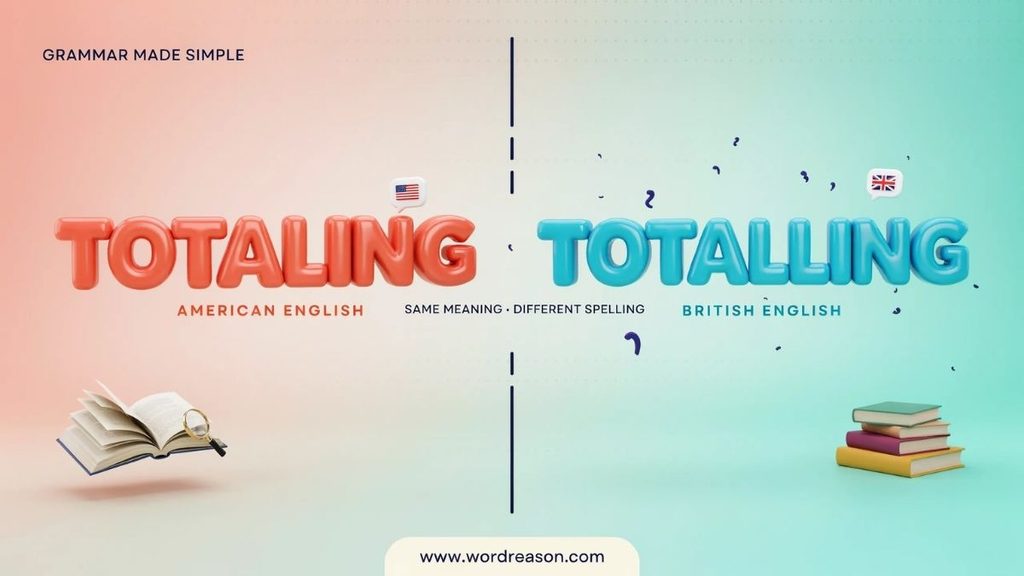
The difference between totaling and totalling relates to a spelling pattern involving final consonants and suffixes.
In British English, writers often double the final consonant of a word before adding a suffix that begins with a vowel. American English usually follows a different convention with words ending in L.
Consider the base word total. It ends with one L. When you add the suffix -ing, American English generally keeps one L, producing totaling. British English doubles the L, producing totalling.
This pattern also affects the past tense.
| Word Form | American English | British English |
|---|---|---|
| Base verb | Total | Total |
| Present participle | Totaling | Totalling |
| Past tense | Totaled | Totalled |
| Past participle | Totaled | Totalled |
The spelling changes according to regional conventions, but the meaning and grammatical function remain the same.
Why Does the L Double in British English?
British English commonly doubles the final L when adding suffixes such as ed and ing.
For example, the verb travel becomes travelling and travelled. Similarly, total becomes totalling and totalled.
This convention helps maintain established British spelling patterns.
Why Does American English Keep One L?
American English generally keeps a single L in words such as total when adding -ing or -ed.
Therefore, American writers use totaling and totaled.
This spelling convention appears in many American dictionaries, newspapers, educational resources, and professional documents.
Learn the difference between confusing more English words
Grate or Great Which spelling Is Correct?
in Example Sentences
Seeing both spellings in context makes the difference easier to remember. The following examples demonstrate how each form works in everyday and professional writing.
| American English | British English |
|---|---|
| She is totaling the monthly expenses. | She is totalling the monthly expenses. |
| The cashier is totaling the purchases. | The cashier is totalling the purchases. |
| He spent the afternoon totaling the invoices. | He spent the afternoon totalling the invoices. |
| The donations are totaling $8,000. | The donations are totalling £8,000. |
| We are totaling the sales figures. | We are totalling the sales figures. |
Examples of Totaling in American English
The finance department is totaling the company expenses.
I spent an hour totaling the receipts from my business trip.
The accountant is totaling the figures before preparing the financial report.
We are totaling the donations collected during the fundraiser.
The cashier finished totaling the grocery bill.
Examples of Totalling in British English
The finance department is totalling the company expenses.
I spent an hour totalling the receipts from my business trip.
The accountant is totalling the figures before preparing the financial report.
We are totalling the donations collected during the fundraiser.
The cashier finished totalling the grocery bill.
Notice that the sentences have identical meanings. Only the spelling changes.
Learn the difference between confusing more English words
Forest or Forrest Which Spelling Is Correct?
Is This Used for Adding Numbers?
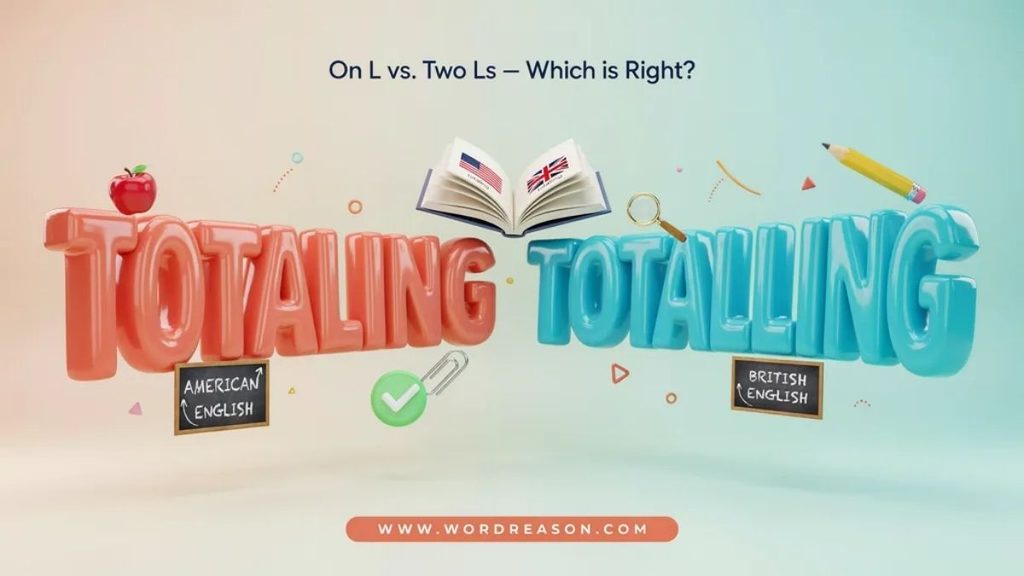
Yes. Both spellings can describe the process of adding numbers or amounts to calculate a final sum.
For example, a student might total several figures to solve a mathematics problem. Similarly, a business might total its monthly sales to calculate its revenue.
The American form is totaling, while the British form is totalling.
Consider this example
A store sells products worth $150, $250, and $100. The combined amount is $500.
An American writer might say
The manager is totaling the daily sales.
A British writer might say
The manager is totalling the daily sales.
Both sentences describe the same calculation.
Totaling Expenses
Businesses often use the verb total when calculating operating costs, employee payments, invoices, and other financial figures.
For example
The accountant is totaling the office expenses.
She finished totaling the travel costs.
The finance team is totaling the monthly invoices.
Totaling a Bill
You can also use the word when calculating the final amount of a bill.
For example
The waiter is totaling the restaurant bill.
The cashier is totaling the cost of all the items.
The final bill comes to $85.
In everyday conversation, people may also use phrases such as adding up, calculating, or working out the total.
Learn the difference between confusing more English words
Fiend or Feen Which Spelling Is Correct?
What Does Totaling a Car Mean?
Totaling a car has a different meaning from adding numbers together. In American English, the expression usually refers to damaging a vehicle so severely that the cost of repairing it becomes uneconomical or the vehicle qualifies as a total loss under the relevant insurance rules.
For example
The accident totaled his car.
The insurance company declared the vehicle a total loss.
The storm damage was severe enough to total the vehicle.
In this context, totaled is the American spelling. British English commonly uses the expression written off instead.
For example
The accident wrote off her car.
The insurance company declared the vehicle a write off.
The meaning depends on context. When someone talks about totaling expenses, they mean adding amounts together. When someone says an accident totaled a car, they mean the vehicle suffered extensive damage.
Learn the difference between confusing more English words
Enquiries or Inquiries Which Spelling Is Correct?
Totaling vs Totalled What Is the Difference?
They are different grammatical forms of the same verb, but they also reflect regional spelling conventions.
Totaling is the American present participle or gerund. Totalled is the British past tense and past participle.
The American equivalents are totaling and totaled.
| American English | British English | Grammatical Form |
|---|---|---|
| Totaling | Totalling | Present participle or gerund |
| Totaled | Totalled | Past tense or past participle |
For example
American English The accountant is totaling the figures.
British English The accountant is totalling the figures.
American English She totaled the expenses yesterday.
British English She totalled the expenses yesterday.
Do not confuse the different verb forms. The choice between one L and two Ls depends on regional spelling, while the choice between -ing and -ed depends on grammar.
Learn the difference between confusing more English words
Creator vs Creater Which Spelling Is Correct?
What Are the Synonyms of Totaling or Totalling?
Several words and phrases can replace totaling or totalling, depending on the sentence and intended meaning.
When you mean adding numbers together, you can use adding up, calculating, summing, or counting.
When you mean reaching a final amount, you can use amounting to, coming to, or adding up to.
| Synonym | Meaning | Example |
|---|---|---|
| Adding up | Combining numbers | She is adding up the expenses. |
| Calculating | Working out a numerical result | He is calculating the final cost. |
| Summing | Finding the total of several amounts | They are summing the figures. |
| Counting | Determining the number or amount | She is counting the collected donations. |
| Combining | Bringing amounts together | The accountant is combining the figures. |
| Adding together | Joining several values through addition | We are adding together the monthly sales. |
| Computing | Performing a mathematical calculation | The software is computing the total. |
| Amounting to | Reaching a particular amount | The expenses amount to $2,000. |
Choose a synonym that fits your sentence naturally. For example, calculating may sound more appropriate in a technical report, while adding up works well in everyday conversation.
Learn the difference between confusing more English words
Emphasise or Emphasize which spelling is correct?
What Is the Origin of the Word Total?
The word total has roots in French and Latin. It developed from the Old French word total, which came from the Medieval Latin word totalis. The Latin root totus means whole or entire.
The word originally described something complete or whole. Over time, its meaning developed to include the entire amount of several smaller values.
Today, total functions as both a noun and a verb.
As a noun, it refers to the complete amount after adding several figures together.
For example
The total of the three payments is $300.
As a verb, it means to calculate the combined amount.
For example
The accountant will total the payments tomorrow.
The forms totaling and totalling developed from the verb total by adding the suffix -ing. Their different spellings reflect American and British spelling conventions rather than different origins.
Fill in the Blanks
Complete each sentence with the correct word or spelling.
- American English uses __________ with one L.
- British English generally uses __________ with two Ls.
- Both totaling and totalling are __________ spellings.
- The word total means the complete __________ of several amounts.
- The accountant is __________ the monthly expenses.
- British English uses __________ as the past tense of total.
- American English uses __________ as the past tense of total.
- Adding several numbers together helps you find their __________.
- Totaling can function as a gerund and a present __________.
- The base word of totaling is __________.
- She is __________ the grocery bill before paying.
- The British spelling of traveled is __________.
- The American spelling of cancelled is __________.
- Totaling and totalling have the same __________.
- The company is __________ its annual revenue.
- The phrase total up means to __________ amounts together.
- The correct spelling of total amount contains __________ words.
- American English generally keeps __________ L when adding -ing to total.
- British English commonly __________ the final L before adding -ing.
- The accountant finished __________ the invoices.
- Totaled is the American past-tense form of the verb __________.
- Totalling is commonly used in __________ English.
- Calculating and summing are synonyms of __________.
- In the sentence The bill totals $100, totals functions as a __________.
- In American English, I __________ my car means I damaged it severely.
Answer Session
- Totaling
- Totalling
- Correct
- Amount
- Totaling
- Totalled
- Totaled
- Total
- Participle
- Total
- Totaling
- Travelled
- Canceled
- Meaning
- Totaling
- Add
- Two
- One
- Doubles
- Totaling
- Total
- British
- Totaling
- Verb
- Totaled
Here’s a trusted source for clear word meanings:
Frequently asked questions
Does totaling have one L or two?
American English uses totaling with one L. British English uses totalling with two Ls.
How do you use totaling?
Use totaling when adding amounts together. Example: She is totaling the monthly expenses.
What does totalling mean?
Totalling means adding numbers or amounts to calculate a final sum.
Which is correct, totalled or totaled?
Both are correct. Totaled is American English, while totalled is British English.
Which is correct, totalling or totaling?
Both are correct. Totaling is American English; totalling is British English.
Is total or totals correct?
Both are correct. Total is singular, while totals is plural.
What is another word for totaling?
Adding up, calculating, summing, and computing are common alternatives.
What is the correct spelling of total amount?
The correct spelling is total amount, written as two words.
What is total slang for?
In slang, total can mean complete, absolute, or extreme.
How do you spell I totaled my car?
American English uses I totaled my car. British English commonly uses I wrote off my car.
Is retotaled spelled correctly?
Yes. Retotaled is American English; retotalled is British English.
How do you spell totalling in the UK?
The British spelling is totalling, with two Ls.
Additional AEO Questions
What is the base word of totaling?
The base word is total.
Is totaling a gerund or present participle?
It can function as both, depending on the sentence.
Does totaling mean adding everything together?
Yes. It means combining amounts to find their total.
What is the difference between total and total up?
Both mean calculating the combined amount of several figures.
Can I use totaling in business writing?
Yes. It is suitable for professional American English writing.
What is the opposite of totaling?
Subtracting or deducting can express the opposite mathematical operation.
Why does British English double the L in totalling?
British spelling conventions commonly double the final L before adding -ing.
conclusion
So, is it totaling or totalling? Now you have the answer, and there is no need to let one little letter throw your writing off balance! Both spellings are correct. American English prefers totaling, while British English favors totalling. The same regional difference applies to totaled and totalled. Whether you are adding expenses, calculating a bill, or preparing a financial report, simply choose the spelling that matches your audience and stick with it. Once you remember this easy distinction, you can leave the spelling confusion behind and focus on getting your numbers right. After all, the only thing that should double is your total, not your confusion!

Bella AJS
Bella AJS is an experienced blogger and passionate language enthusiast at WordReason. She specializes in English grammar, word meanings, spelling, and commonly confused words. With a clear and practical writing style, Bella helps readers understand tricky language rules without the textbook headache. Her goal is simple: make English easier, clearer, and more enjoyable one word at a time.